Newborn Care: Neonatal Intensive Care Unit, Newborn Nursery and Delivery Room
PL-1 year: Newborn Nursery
Interns rotate on both the well newborn hospitalist service at Brigham and Women’s Hospital or the Nursery Service at Boston Medical Center. Interns are responsible for the evaluation and management of healthy newborns with the help of nurses and lactation specialists, and under the guidance of an attending pediatrician. Interns also attend didactic lectures, discussion sessions and demonstrations that focus on care of the newborn. They may also attend outpatient sessions focused on newborn care, including lactation support for families with newborns.
PL-1 and Supervisory Years: Neonatal ICU
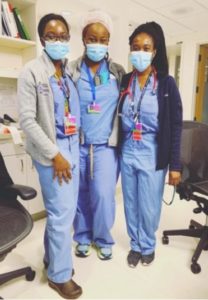
Interns and residents rotate through the NICU at Brigham and Women’s Hospital (BWH) and Boston Medical Center (BMC). The BWH NICU is a 64-bed unit and has the highest volume of high risk deliveries in New England. Interns work on one primary acute care team along with a fellow and attending. As of 2025, interns rotate on this service exclusively on day shifts (with fellows covering the service overnight). The BMC NICU is a 22-bed unit and the team consists of an attending neonatologist, one senior resident and two interns.
Besides caring for critically ill neonates, residents obtain extensive experience in the resuscitation and stabilization of newborns at high-risk deliveries. At both sites neonatal attendings are on site 24 hours per day to provide supervision and teaching. Residents participate in a comprehensive educational curriculum including daily lectures by attending neonatologists covering common neonatal problems. These include respiratory distress syndrome, necrotizing enterocolitis, hyperbilirubinemia, and neonatal nutrition. All residents are trained in the Neonatal Resuscitation Program during intern orientation and then re-certify during their PL-2 year.
Residents in both years recruit newborns from their newborn rotations to their continuity primary care clinic patient panels.